Social work is one of the most impactful professions, addressing societal challenges and empowering communities. In Kenya, becoming a licensed social worker not only opens the door to a fulfilling career but also ensures you meet the standards of professional practice. This guide outlines the steps to help you navigate the path to licensure in Kenya and begin your journey to making a difference.
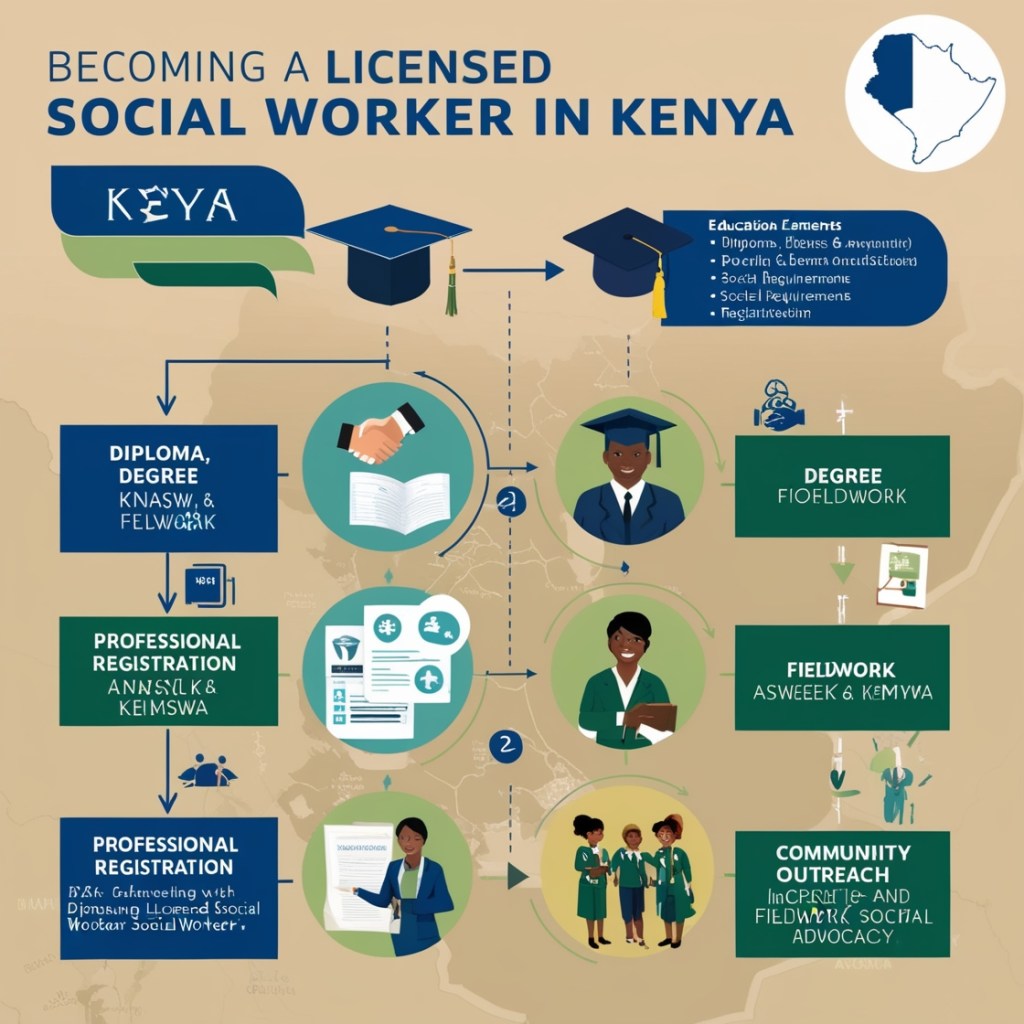
Step 1: Understand the Role of a Social Worker
Before diving in, it’s essential to understand what social work entails. Social workers advocate for individuals and communities, addressing issues like poverty, mental health, and child welfare. Their work spans schools, hospitals, non-profits, and private practice.
Step 2: Pursue the Required Education
To qualify as a social worker in Kenya, you must have the right academic credentials.
Diploma in Social Work: A foundational qualification offered by institutions like Kenya Institute of Social Work.
Bachelor’s Degree in Social Work: Provides advanced knowledge and is offered by universities like Moi University and the University of Nairobi.
Master’s Degree (Optional): Ideal for specialization in areas like clinical social work or social policy.
Tip: Ensure the institution is recognized by the Commission for University Education (CUE) in Kenya.
Step 3: Complete Field Practicum
Practical experience is a critical component of your training. Most programs require students to complete internships or fieldwork placements.
What You’ll Do: Work under a qualified supervisor in hospitals, community-based organizations, or schools.
Duration: Varies but often ranges from 3 to 6 months.
Step 4: Register with Relevant Professional Bodies
To practice as a licensed social worker in Kenya, registration with professional bodies is not mandatory, but it helps.
Key Organization: The Kenya National Association of Social Workers (KNASW).
Kenya Medical Social Workers Association (KEMSWA) and Association of Social Work Educators in Kenya (ASWEK)
Upcoming Regulation: Keep an eye on the progress of the Institute of Social Work Professionals Bill, 2020, which seeks to formalize social work practice further.
Pro Tip: Membership in these organizations enhances your credibility and provides networking opportunities.
Step 5: Apply for Licensure
Once we have the act of parliament in place, you have completed your education and fieldwork, you will be able to apply for a professional license through the Kenya Council of Social Work Professionals (KCSWP). This certification will demonstrate your competence and allows you to work legally.
Requirements will include:
Academic transcripts.
Proof of internship completion.
In the meantime, become a registered member with KNASW, KEMSWA or ASWEK.
Step 6: Build Your Career Path
Explore diverse career opportunities:
Public Sector: Work with the Ministry of Labour and Social Protection.
Non-Governmental Organizations (NGOs): Engage in community development projects.
Private Practice: Offer therapy or consultancy services.
Bonus: Continue professional development by attending workshops, seminars, and additional certifications.
Conclusion Becoming a licensed/ registered social worker in Kenya is a structured but rewarding process. By following these steps, you’ll not only meet professional requirements but also set yourself up for a career that transforms lives.
Call to Action Are you ready to start your journey in social work? Share this guide with aspiring social workers or visit The Social Worker for more tips and resources on navigating this fulfilling profession!
#SocialWorkKenya #ProfessionalLicensure #CareerGuide
 THE SOCIAL WORKER