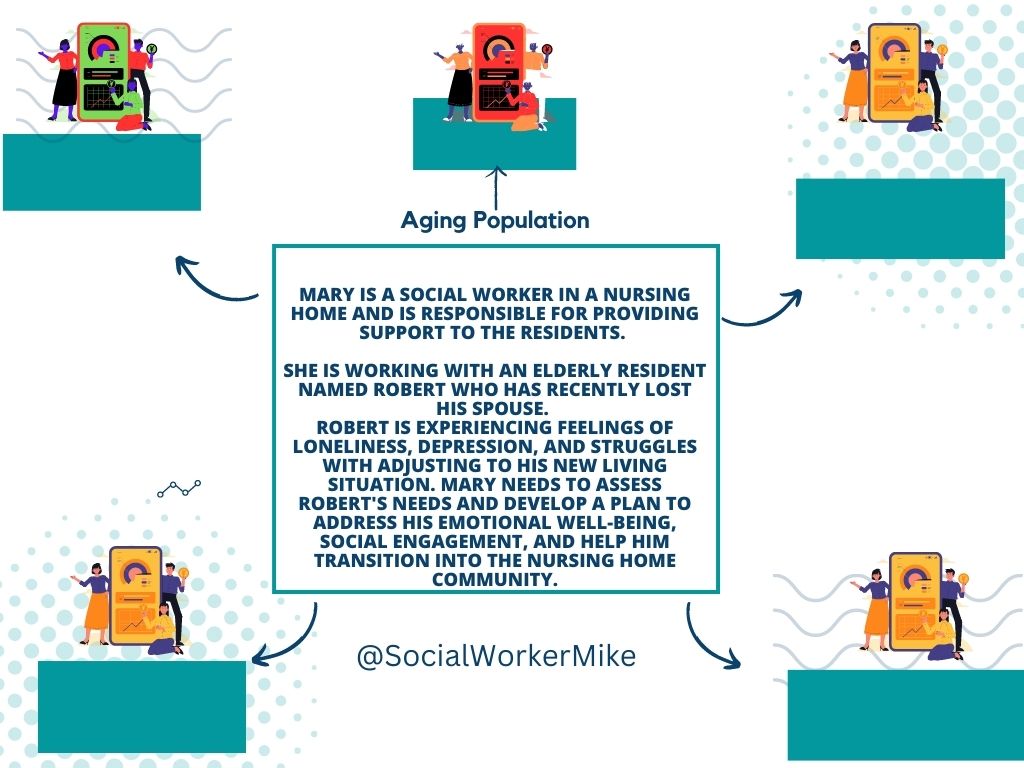
Intervention Plan for Robert:
Initial Assessment:
a. Establish a trusting relationship with Robert through open and empathetic communication.
b. Conduct a comprehensive assessment of Robert’s emotional well-being, including symptoms of depression, anxiety, and grief.
c. Assess Robert’s social support system, including his relationships with family, friends, and other residents in the nursing home.
d. Evaluate Robert’s current level of engagement in activities and his overall satisfaction with his new living situation.
Emotional Support and Grief Counseling:
a. Provide a safe space for Robert to express his emotions and share his grief over the loss of his spouse.
b. Offer supportive counseling to help Robert process his grief and adjust to the changes in his life.
c. Utilize techniques such as active listening, validation, and empathy to validate Robert’s feelings and experiences.
d. Collaboratively develop coping strategies to manage feelings of loneliness and depression.
Individual Therapy Sessions:
a. Conduct regular individual therapy sessions with Robert to address his emotional well-being and provide ongoing support.
b. Utilize evidence-based therapeutic approaches, such as cognitive-behavioral therapy (CBT) or supportive therapy, to address Robert’s specific needs.
c. Explore his thoughts and beliefs related to his loss and the transition into the nursing home, and challenge negative thinking patterns.
d. Assist Robert in developing adaptive coping skills to manage his emotions and improve his overall well-being.
Social Engagement and Community Integration:
a. Facilitate social opportunities for Robert to connect with other residents who share similar interests or hobbies.
b. Encourage Robert to participate in group activities and events within the nursing home, such as games, arts and crafts, or exercise classes.
c. Foster relationships between Robert and other residents through structured social programs and informal interactions.
d. Identify and support Robert’s involvement in community resources and outside organizations to broaden his social network.
Support for Adjustment and Routine Building:
a. Collaborate with Robert to establish a daily routine that provides structure and purpose to his days.
b. Assist Robert in navigating the nursing home environment and familiarizing him with the available services and resources.
c. Help Robert identify meaningful activities and interests that align with his preferences and abilities.
d. Provide education and support to help Robert understand and accept his new living situation, addressing any concerns or misconceptions.
Family and External Support:
a. Involve Robert’s family members in the care planning process, if appropriate and with Robert’s consent.
b. Educate and update family members about Robert’s emotional well-being, his progress, and ways they can support him.
c. Connect Robert with external support services, such as grief support groups or community organizations focused on aging and mental health.
d. Collaborate with relevant professionals, such as psychologists or psychiatrists, to provide comprehensive care for Robert’s mental health needs.
Regular Evaluation and Adjustments:
a. Monitor Robert’s progress and emotional well-being through regular assessments and check-ins.
b. Seek feedback from Robert about his experience with the interventions and adjust the treatment plan as necessary.
c. Collaborate with the nursing home staff to ensure consistent support and coordination of care for Robert.
d. Continuously evaluate the effectiveness of the interventions and modify strategies to best meet Robert’s evolving needs.
 THE SOCIAL WORKER